
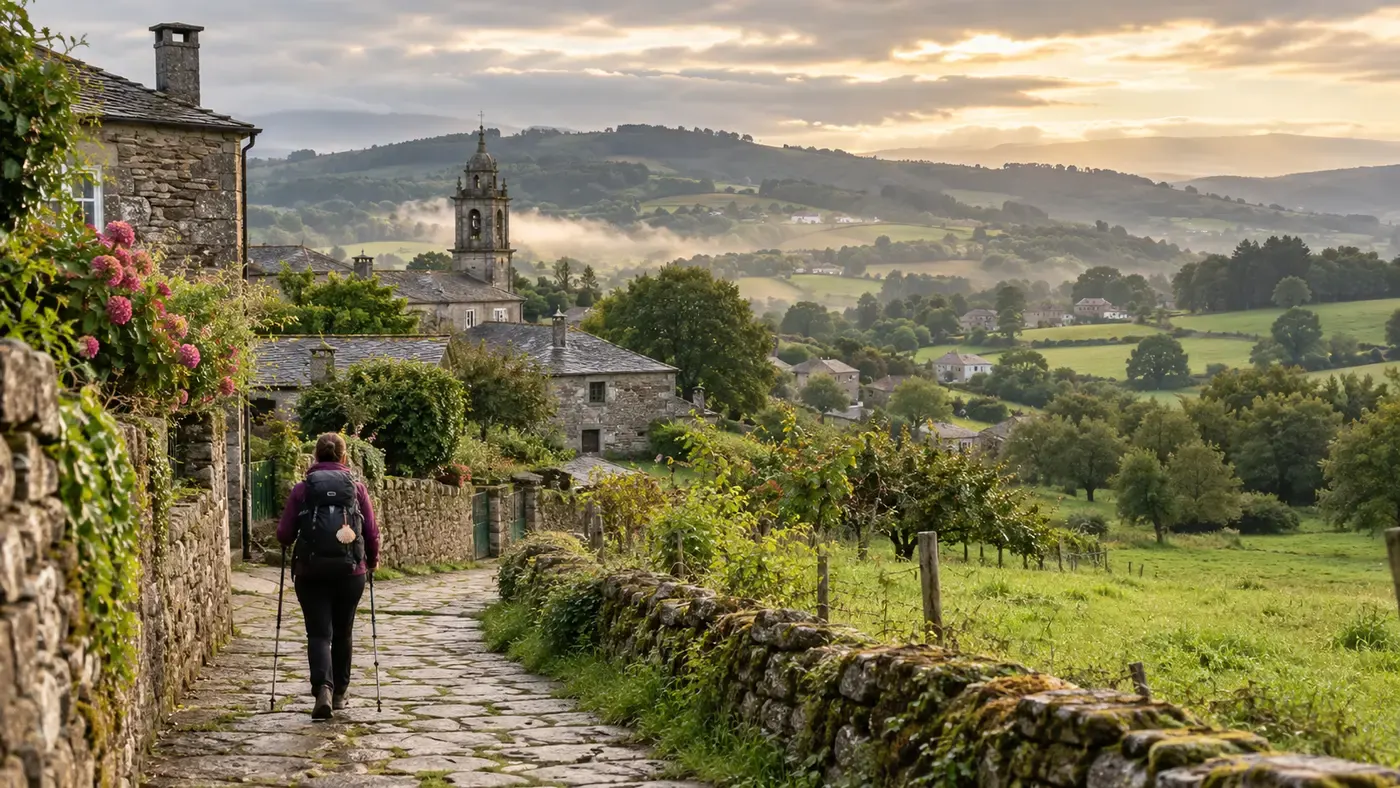
Decide what journey you want
Do you want to walk for a weekend, for a week or return several times to the same itinerary? Start with this question, then choose an area you can reach without spending all your days on transfers.
A short route is not automatically easy. Compare surfaces, climbs, seasonality and distances between services. If you have little experience, use practice walks to understand what kind of day you can enjoy.
From the catalogue to the route page
Open Italian pilgrimage routes and search for names or areas that interest you. The route page brings together available data and source references: read it as a basis for comparison, not confirmation of every practical detail.
When a stage, track or elevation information is unavailable, supplement your programme with the route’s source. Missing data does not mean a section is easy or can be improvised.
Try a planning exercise
Before deciding, identify a possible first stage, accommodation at the finish and a connection home. If you can describe these three things with specific references, your choice is becoming a journey.
You can save routes that interest you to your profile, find companions on the noticeboard and download the dedicated PDF. Compare two alternatives before booking.
Italian pilgrimage routes: how to organise stages, accommodation and a PDF guide
Choose a route from the catalogue and check its length, endpoints and available features. Then look at the map and recorded stages: they help you understand where your day could start and finish.
Distinguish verified data from information that is still incomplete. A catalogue brings together routes with different levels of documentation; when a usable track is missing, do not replace it with an imagined line.
Accommodation and stages belong in the same programme
For each arrival, find reachable accommodation and check any extra distance from the track. The Accommodation Italy section also lets you search by name and town, useful when comparing alternatives.
Phone numbers and booking links, where provided, help you check availability and terms. In small villages, also ask what you will find on arrival and which services are actually open on your dates.
Keep what you have decided
Download the route PDF and supplement the references with property confirmations and return connections. The guide can be read offline after downloading, but its information does not update automatically.
If you want to gather notes and a personal track, use the account editor. For a shared experience, find or propose a group, clearly specifying your chosen Italian section.
Download the guide ↗Create a personal route ↗Find companions ↗
Via Francigena in Italy: how to choose and prepare a section
The section from the Great St Bernard Pass to Rome brings together different landscapes and towns. You need not think of it only as a journey to complete in one go: you can choose a part that fits your time.
Define what you want to prioritise, such as villages, landscapes or pilgrimage sites. Then check connections to the starting and finishing points: an interesting section must also be practical to organise.
Choose a section from the sequence of stages
Open the SantiagoLand page and look at the available route data. Select a series of stages without assuming every day requires the same effort. Mountain and lowland settings need different interpretations.
When comparing kilometres, use data for the same variant. The catalogue, a GPX track and the official description may have different scopes: check their endpoints before comparing them.
Accommodation and a guide for your departure
Find accommodation in your chosen towns, contact them for your dates and note an alternative. Also check the credential and section updates with the official source.
You can download the dedicated PDF from the guide catalogue. Keep it with contacts and confirmations, remembering to recheck practical references before departure.
Via di Francesco from La Verna to Assisi: how to prepare your pilgrimage
La Verna and Assisi are the reference points for this itinerary; they should not be confused with other parts of the Franciscan network. The official site also describes connections from Florence and Rimini and itineraries towards Rome.
Open the dedicated SantiagoLand page to keep your journey’s endpoints clear. Choosing the section helps compare data and guides without combining different routes.
Read the landscape alongside the stages
The route crosses wooded and hilly areas and reaches places such as Gubbio before arriving in Assisi. Climbs and descents make it useful to read each day beyond its kilometres alone.
On SantiagoLand you can browse the available data and page references. Then use the official source to compare variants and updates: the route’s name does not automatically identify a single sequence of stops.
Make room for visits and rest
If you want to visit a sanctuary or pause at a Franciscan site, allow extra time in your programme and check access. Arriving late can change the experience more than a few kilometres less.
Find accommodation in your stopping towns and download the dedicated PDF. If you are looking for companions, describe the pace and interest in visits in your group proposal: this is an important part of the shared journey.
Find overnight stays ↗Download the guide ↗Propose or find a group ↗
Cammino di San Benedetto: from Norcia to Montecassino, how to organise your journey
Norcia, Subiaco and Montecassino mark different moments in Benedict’s story. The route connects them across Umbria and Lazio, with stops in villages and religious sites.
The official source describes the walking route in 16 stages. This reference helps you understand the whole journey without requiring every pilgrim to follow the same schedule.
Compare days before combining them
The official table shows significant differences between stages. Before combining two, compare distance, elevation and places to stop. A shorter day can leave time for a visit or recovery.
On the SantiagoLand page you will find available data and references to consult. If planning a cycling journey, check the specific documentation: do not assume each walking section is equivalent for other transport.
Turn stops into a concrete programme
Choose accommodation in the towns where you expect to arrive and ask for confirmation for your travel dates. If you want to visit Subiaco or Montecassino, separate visiting time from walking time.
Download the site’s guide and consult the latest route updates before leaving. You can gather your programme into a personal route and share it with companions.
Via Peuceta from Bari to Matera: how to prepare the Cammino Materano
The route starts at the Basilica of Saint Nicholas and crosses olive groves, plateaus and historic centres before reaching Matera. The official source describes a sequence of seven stages and places such as Bitetto, Cassano delle Murge and Altamura.
The Cammino Materano site includes several routes. When searching for information, specify Via Peuceta: news about another itinerary in the network does not necessarily describe your departure.
Compare data without mixing variants
Total distances may differ between catalogues, tracks and descriptions. Before using them to divide your days, check that the starting point, finish and variant are the same. The individual stage table is the most useful reference for your programme.
Use the SantiagoLand page to gather information and turn to the official source for updates. Also consider supplies and access: their distribution matters as much as the day’s distance.
Accommodation, visits and the return journey
Find properties in your stopping towns and confirm what is available on your dates. If you want to spend time in Matera, allow for it after walking and organise your return separately.
Download the dedicated PDF from the catalogue and keep confirmations with the guide. You can also look for companions interested in the same section, specifying time for visits and accommodation type in your proposal.
Find Italian accommodation ↗Download the Via Peuceta guide ↗Explore groups ↗