A tomb, a road, a pilgrimage.
According to Christian tradition, the tomb of the apostle was recognized in Galicia in the 9th century, around the years 820–830. Since then the place attracted pilgrims from increasingly distant regions of Europe.

The Way of St. James was born as a Christian pilgrimage to the venerated tomb of the apostle Saint James the Greater, in the Cathedral of Santiago de Compostela. Knowing this destination gives a different meaning even to today's steps.
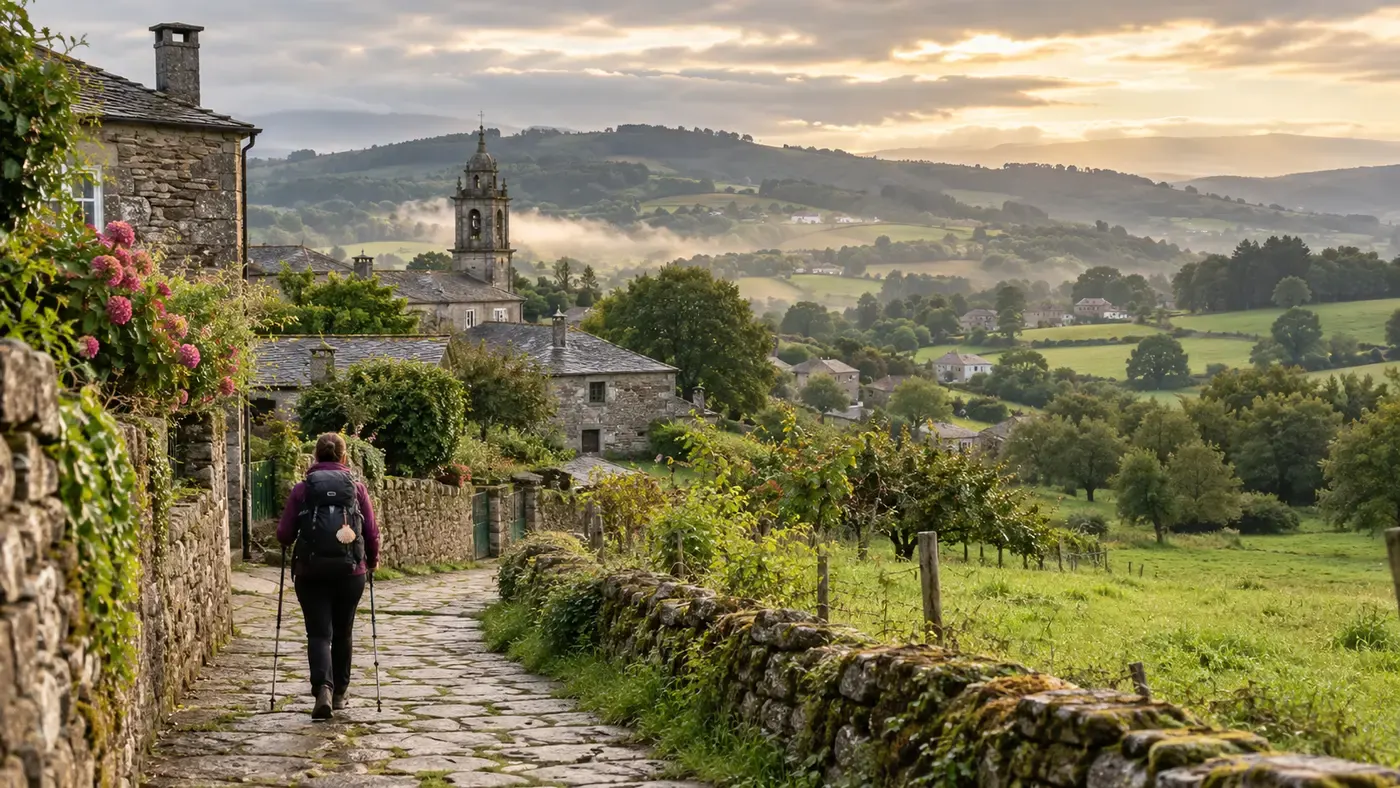
You can set out for faith, to give thanks, to entrust a person to a prayer or to find listening and silence again. Everyone carries a story with them.
According to Christian tradition, the tomb of the apostle was recognized in Galicia in the 9th century, around the years 820–830. Since then the place attracted pilgrims from increasingly distant regions of Europe.
Between the 12th and 13th centuries pilgrimage spread widely. Along the routes hospitality, churches, bridges and care places grew. Santiago became one of the great centers of Christianity along with Rome and Jerusalem.
At the end of the road many pilgrims enter the Cathedral to pause at the apostle's tomb. Walking, meeting others and arriving in Santiago can become an occasion for gratitude, searching and faith.
Santiago is the Spanish name of the apostle whom in Italian we call san Giacomo il Maggiore. The Latin name Iacobus, accompanied by the title of saint, changed over time into the form Sant-Iago and then in Santiago.
The city's name thus preserves the memory of the saint: it is the place where Christian tradition recognizes his burial and towards which pilgrims have been heading for centuries.
According to tradition, some mysterious lights indicated the location of the apostle’s tomb. The story of the finding is linked to the 9th century and to Bishop Theodomir of Iria Flavia. King Alfonso II had a first temple built to house the tomb: around that place a city and a pilgrimage grew.
From these lights comes the most evocative explanation of Compostela: Latin Campus Stellae, literally “field of the star,” often told as “field of stars” or “starry field.” A light that marks the destination: it is the image with which popular tradition accompanies the city’s name.
The “campo stellato” belongs to the legend and memory of the Camino; however, its linguistic derivation is rejected by the majority of scholars. In medieval documents the form appears as Compostella. The suggested explanations include compositum tellus, interpreted as “well-composed land,” and Latin terms linked to burial or an ancient cemetery. To tell the stars thus means guarding a tradition, without presenting it as a proven etymology.
Sources on names and discovery: Xacopedia · Santiago, Campus Stellae, Compostela and History of the Cathedral.
From the calling by the lake to the Transfiguration and Gethsemane: read the passages featuring James the Greater, with references and explanations.
Get to know James in the GospelsNella chiesa di Santa Maria del Cammino (Santa María del Camino), a Santiago de Compostela, i padri Guanelliani propongono un incontro per i pellegrini italiani. La catechesi di padre Fabio Pallotta è un’occasione per riflettere sul senso cristiano del pellegrinaggio e su ciò che il Cammino può portare nella vita di ogni giorno.
La locandina ufficiale del programma stagionale 2024 indica ogni giorno alle 18:00 la catechesi e alle 19:00 la messa in italiano. Sono orari di riferimento da confermare con la missione per il periodo del tuo viaggio; non è un calendario verificato per tutto il 2026.
“Saint James, accompany our walk. Give us strength on the climbs, care for those we meet and an open heart when we reach Santiago.”
Original text by SantiagoLand, offered as a simple invitation to reflection.For further information: Camino de Santiago in Galicia and Cattedrale di Santiago.