
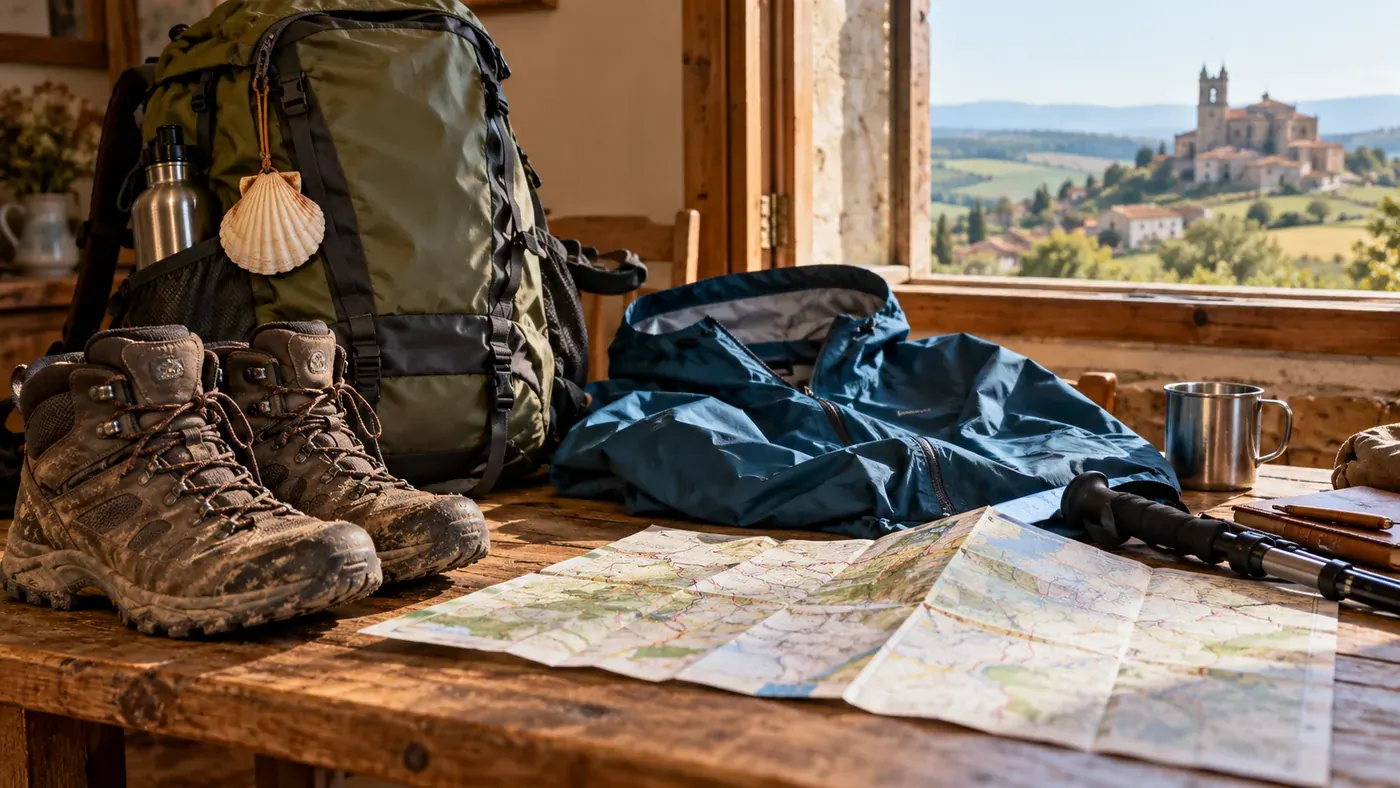
Organise the contents around three moments
While walking, keep water, a snack, your phone and rain protection accessible. For arrival, prepare dry clothes and washing essentials. For the night, check with your accommodation what you need: a sleeping bag liner, possibly a sleeping bag and personal accessories.
Documents, your credential and useful copies should be protected from water. Organising contents in separate bags helps you find things without emptying everything in the rain.
Remove what you did not use on practice walks
Pack your backpack a few days ahead and take it on a practice walk. Note what you actually used and which objects serve the same purpose. One change of clothes you can wash may be more useful than several heavy items to carry.
The most useful comparison is between two versions of your own backpack. Weigh the first, remove unnecessary objects and try again. The site’s calculator provides an initial reference: fit and travel conditions remain decisive.
Assess your backpack weight ↗Read the equipment guidelines ↗
Complete the list after choosing your stages
A day with few supply points needs different arrangements from a stage between towns. Look at where you plan to stop and what you can wash or dry on arrival; agree any needs with the accommodation in advance.
If you use a luggage transfer service, keep everything you need until collection with you. The route guide helps gather references: the service must be confirmed for your exact dates.
Download a route guide ↗Backpack transport: seasonal checks ↗
A practical list to adapt to the season
For walking: tested footwear, walking socks, quick-drying clothes, a waterproof jacket and sun protection. For stops: a dry change, light footwear and a small washing and drying kit. For nights: earplugs and the bedding required by your accommodation. Add ID, a health insurance card, pilgrim credential, phone, charger and personal medication. This is a planning baseline: camping or a mountain section requires a different assessment.
Calculate the weight without a rigid target
Calculation example, not a recommended load: a 1.2 kg backpack + 4.8 kg of dry contents + 1.5 litres of water, roughly 1.5 kg, + 0.5 kg of food make about 8 kg at departure. The same packing list weighs less before resupply and more afterwards. Test the full load on ascents and descents: a percentage of body weight alone does not show that a backpack suits you. Remove duplicates without cutting water, weather protection or personal necessities.
If you use luggage transport
Make two separate lists: items in the transported bag and items that always stay with you. Keep documents, medication needed during the day, water, rain protection and a warm layer accessible. Ask the service for the exact delivery address, collection deadline, weight limit and procedure if your stage changes. Do not put everything you need in the transported bag in case of delays. Confirm that both properties accept the service on your dates.